Now Available
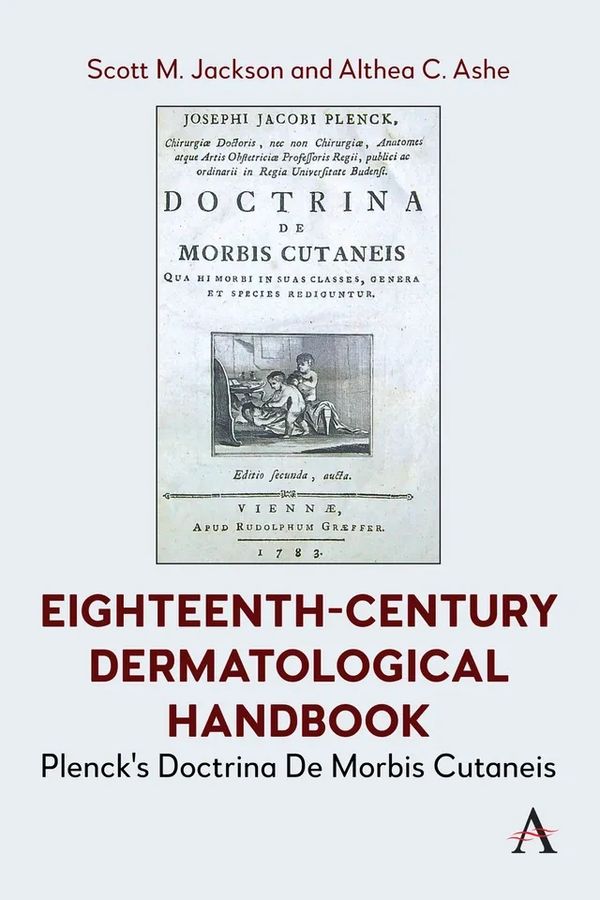
Where It All Began: Plenck's Doctrina de Morbis Cutaneis
For the very first time, the 18th-century handbook, Doctrina de Morbis Cutaneis (1783 edition), has been translated into English. In an effort to distill confusing information about skin diseases into a simple system for his students, Joseph Jacob Plenck (1738-1807)--unknowingly and without any recognition--set the study of skin disease on a path towards formal specialization. Doctrina was the text that inspired Robert Willan (1757-1812) to make his own system, and thus, it is the foundational text of dermatology. For the 250th anniversary of the first edition of this work (1776), it is our intent both to honor Plenck with a translation of his masterful work and to reveal its secrets to modern readers and scholars. The publisher's website can be accessed here. Available for purchase also from Amazon.com
Now Available

Skin Disease & The History of Dermatology: Order Out of Chaos
Now Available!